
Views: 0 Author: Site Editor Publish Time: 2026-10-23 Origin: Site


Industrial operations rely heavily on the continuous performance of heat exchangers. When these thermal management systems fail, entire plants shut down. Within these units, the specific finned tube dictates immediate heat transfer efficiency and long-term reliability. Engineers frequently face a critical crossroads during the design phase of air coolers. They must decide between wrap-on finned tubes and embedded finned designs.
This breakdown compares these dominant manufacturing methodologies. It casts a spotlight on the highly durable G-Type Finned Tube, which serves as the industry benchmark for embedded fins. Making the correct selection influences thermal performance, lifecycle maintenance expenditures, and system longevity. Embedded tubes feature fins mechanically locked into a plowed groove within the base tube. This delivers unparalleled bond strength. Conversely, wrap-on variations depend entirely on tension. They are cost-effective yet vulnerable in extreme temperature environments. While wrap-on profiles generally max out at 130 degrees Celsius, embedded designs comfortably withstand scorching conditions up to 400 degrees Celsius. Tension-wrapped tubes boast an attractive initial price tag. However, the rugged durability of embedded solutions consistently yields a superior return on investment for demanding applications.
Recent market analyses reveal a definitive shift in how petrochemical and power generation sectors approach heat exchanger procurement. Historically, plant operators prioritized lower initial capital expenditures, leading to the widespread adoption of tension-wrapped tubes. Today, the landscape looks entirely different. Driven by increasingly harsh operational environments and a critical need to minimize unplanned downtime, the industry is pivoting strongly toward embedded fin technologies. Facilities operating in extreme climates, from offshore platforms to desert refineries, now demand robust mechanical bonds. This transition reflects a broader engineering philosophy emphasizing lifecycle cost analysis over upfront savings. Operators realize that investing in mechanically locked fins prevents the catastrophic efficiency drops associated with older tension-based systems.
To make an informed engineering decision, one must grasp how the extended surface area attaches to the primary pressure boundary.
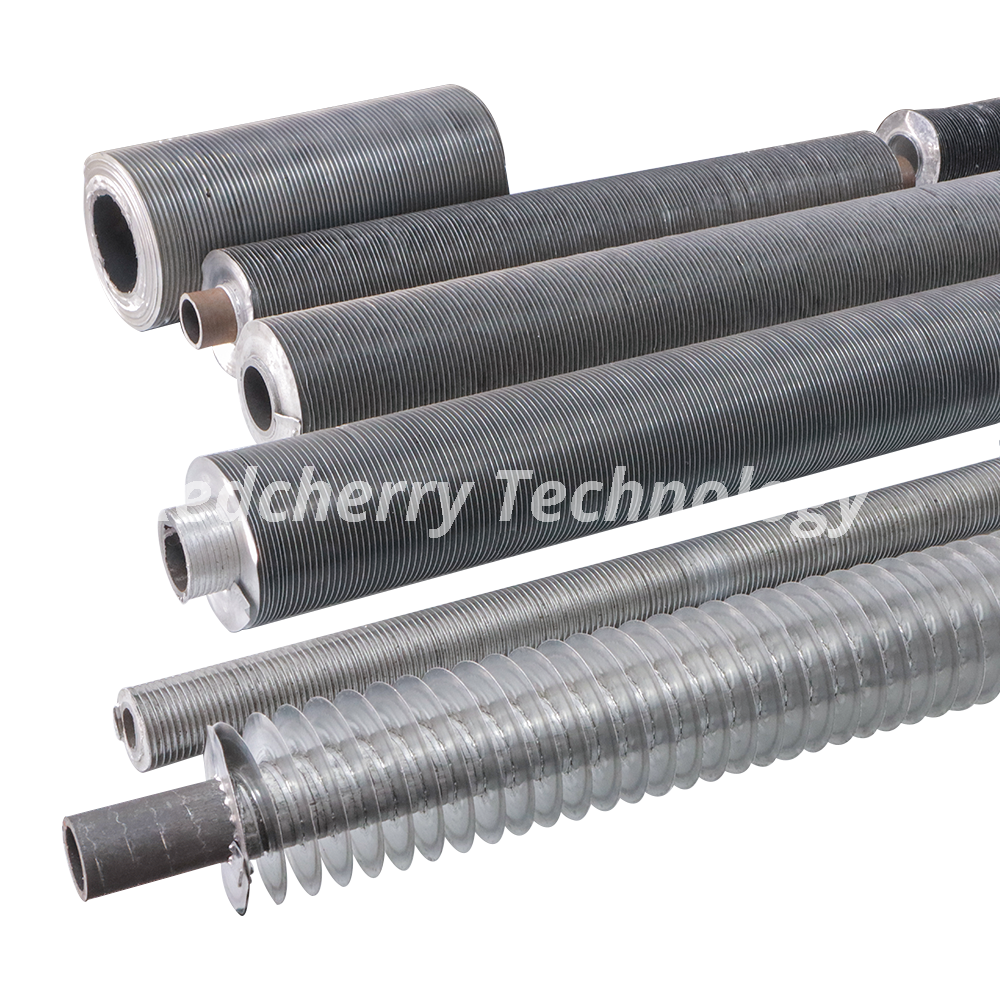
Wrap-on finned tubes are manufactured by tightly winding an aluminum strip around the base tube under significant mechanical tension. This process relies on the elastic properties of the metal to maintain a firm grip. Within this category, several distinct sub-types exist. The standard L-fin features a single L-shaped base sitting flat against the tube. Furthermore, the LL-fin utilizes an overlapping shape to provide coverage, shielding the base metal from external elements. For applications requiring enhanced grip, the KL-fin incorporates a knurled profile. This physically bites into the tube surface, slightly improving heat transfer compared to basic L-fins.
In stark contrast to tension-based designs, the embedded finned tube relies on a robust mechanical bond. Across the industrial sector, this configuration is universally recognized. The manufacturing involves a specialized grooving technique. A continuous helical groove is plowed into the outer wall of the base tube. Simultaneously, the fin strip is fed into this freshly cut channel. Immediately following the insertion, the displaced base metal is forcefully rolled back against the sides of the fin. This permanently locks it into place. The result is a solid, unyielding connection virtually impervious to loosening.
Heavy industry demands components that survive punishing environments. The engineering principles governing embedded designs explain why this specific architecture is highly regarded among frontline pump and heat exchanger engineers.
Creating an embedded fin requires extreme precision. The machinery must plow a groove deep enough to secure the fin without compromising the pressure-retaining structural integrity of the base wall. This high-pressure mechanical lock ensures the fin material will never unwind or flutter. Even when subjected to violent thermal cycling during plant startups, the embedded groove forces the fin and tube to move as a single unified entity.
When specifying equipment, actual product parameters matter more than theoretical concepts. A well-manufactured Economical G-Type Finned Tube exhibits exceptional resistance to thermal shock. For instance, standard configurations often utilize a base tube outer diameter ranging from 16mm to 38mm, paired with fin heights between 10mm and 16mm. Fin density typically hits 7 to 11 fins per inch. These precise metrics ensure maximum heat transfer efficiency through direct metal-to-metal contact. There is no microscopic air gap to act as an insulator. In massive forced-draft air coolers vibrating under giant fan blades, these embedded fins remain rigidly in place.
The versatility of this manufacturing method allows for various material pairings dictated by process fluid and environmental conditions. Typically, the base tube consists of robust carbon steel or corrosion-resistant stainless steel. Meanwhile, the embedded fin is constructed from highly conductive aluminum. This combination leverages the pressure-handling capabilities of steel alongside the rapid heat dissipation properties of lightweight alloys.
While embedded tubes offer maximum durability, wrap-on variations present a practical alternative for specific mid-range applications. Understanding their mechanics helps operators weigh their options fairly.
During fabrication, the fin foot is precisely formed and simultaneously wound tightly around the base tube. The tension applied during this winding process is the sole force keeping the fin attached. One notable structural benefit is that the flattened fin foot essentially creates a continuous sleeve over the base tube. This overlapping layer provides an effective barrier against atmospheric corrosion.
Evaluating the limitations reveals a clear operational window for tension-wrapped designs. On the positive side, they are significantly faster to manufacture. This translates directly to a lower initial capital outlay. However, the primary drawback is a phenomenon known as fin relaxation. At elevated operating temperatures, the aluminum fin expands at a faster rate than the steel tube. This differential expansion causes the tension to relax. It creates an insulating air gap between the fin and the tube, which drastically degrades heat transfer performance.
Let us break down how these two technologies compare across critical engineering metrics.
Engineering Metric | Wrap-on Finned Tubes | Embedded Finned Tubes |
|---|---|---|
Maximum Operating Temperature | Up to 130°C - 250°C | Up to 400°C |
Bond Strength | Tension-based, prone to relaxation | Mechanically locked, extremely high strength |
High-Pressure Cleaning Resistance | Poor, fins easily bent or damaged | Excellent, withstands aggressive water lancing |
Thermal Cycling Endurance | Low, creates insulating air gaps | Superior, moves as a unified entity |
Initial Cost | Lower | Moderate to High, but better ROI |
The most defining limitation of wrap-on fins is their thermal ceiling. Beyond their specific threshold, fin relaxation becomes inevitable. In contrast, the mechanically locked design can effortlessly handle sustained operating temperatures up to 400 degrees Celsius. Because the fin is trapped within the tube wall, thermal expansion does not compromise the bond.
Maintenance practices heavily impact tube longevity. During routine plant turnarounds, maintenance crews frequently utilize high-pressure water lances to blast away accumulated debris. Wrap-on fins are notoriously delicate. The sheer force of a water jet can easily fold the fins over, choking off airflow and ruining bundle efficiency. Conversely, embedded fins stand rigid against aggressive high-pressure washing.
Matching the product to the specific use-case is the cornerstone of effective procurement. Instead of abstract concepts, engineers should use concrete operational parameters to make their choice.
If your process fluid exceeds 150 degrees Celsius, embedded fins are a non-negotiable requirement. They are the standard specification for petrochemical refineries, heavy-duty air-cooled heat exchangers, and high-temperature gas coolers. Additionally, if the equipment is subject to high mechanical vibration from large draft fans, you must select the mechanically locked G-Type Finned Tube to prevent the fins from rattling loose over time.
Tension-wrapped tubes excel in less aggressive environments. Select these if your operating temperatures remain consistently below 130 degrees Celsius. They are highly suited for commercial HVAC systems and lower-temperature food processing plants. In scenarios where atmospheric corrosion poses a far greater threat than high process temperatures, the protective aluminum sleeve of an LL-fin makes it an ideal fit.
Financial considerations play a massive role in project engineering. Navigating the balance between upfront capital expenditure and long-term operational costs requires a strategic approach.
Wrap-on tubes are cheaper to manufacture upfront. The machinery is simpler, and production speed is faster. However, experienced plant managers look beyond the initial purchase order. The extended lifespan and sustained thermal efficiency of embedded tubes rapidly offset their higher initial cost. A heat exchanger that maintains its design cooling capacity over ten years is vastly more profitable than a cheaper unit losing efficiency after just two years.
Advancements in modern manufacturing automation have significantly narrowed the price gap. Buyers looking to balance premium quality with strict budget constraints no longer have to compromise. Exploring options like the Economical G-Type Finned Tube for Budget-Conscious Projects allows procurement teams to secure robust performance without derailing financial parameters.
The decision ultimately hinges on a careful evaluation of operating temperatures, mechanical stress factors, and project budgets. While tension-wrapped designs offer a cost-effective solution for mild environments, they falter under extreme conditions. For high-temperature industrial applications, the unbreakable mechanical bond of an embedded tube stands as the undisputed champion. We strongly encourage engineers and facility operators to rigorously evaluate their current heat exchanger specifications. To secure a tailored solution that aligns with your long-term performance goals, explore the premium offerings at Red Cherry Aluminum and request a custom quote today.
Yes, but careful material planning is essential. Because the base tube is slightly exposed between the aluminum fins, engineers must specify a corrosion-resistant base material like stainless steel. Applying an industrial protective coating is also highly recommended if the external environment contains heavy moisture or corrosive chemicals.
At elevated temperatures, the aluminum fin expands at a noticeably faster rate than the steel base tube beneath it. This differential expansion causes the initial wrapping tension to relax. It creates a microscopic air gap between the two metals. Because air is a poor conductor of heat, this gap acts as an insulator, resulting in a significant drop in overall heat transfer efficiency.
Embedded configurations can safely and continuously operate in environments reaching up to 400 degrees Celsius. The mechanical lock prevents the aluminum fin from loosening, ensuring stable thermal conductivity even under extreme heat and rapid thermal cycling.
Fin density, typically measured in fins per inch, directly dictates the available surface area for heat dissipation. Higher density increases the cooling capacity but also raises air-side pressure drop. Engineers must carefully balance fin density with the fan airflow capabilities to optimize the entire cooling system.
In the vast majority of cases, upgrading is a straightforward retrofit. As long as the outer dimensions, tube pitch, and support box designs match your current tube bundle architecture, you can seamlessly integrate the new tubes. This upgrade dramatically improves equipment operational lifespan and thermal stability.
Embedded tubes easily endure aggressive high-pressure water washing or compressed air cleaning because the fins are mechanically locked into the tube wall. In stark contrast, wrap-on fins are delicate. They require much gentler, low-pressure cleaning methodologies to prevent the fins from bending, flattening, or shifting out of their designated pitch.


