
Views: 0 Author: Site Editor Publish Time: 2026-10-23 Origin: Site


Modern architecture demands building materials that actually perform on the job site. For years, contractors and architects played a frustrating balancing act. Wood warps and rots. Steel rusts and requires heavy machinery to install. uPVC turns brittle under harsh sunlight. That is exactly why extruded aluminum has taken over commercial and high-end residential construction.
How do you turn raw metal into a high-performance structural component? You have to rely on advanced manufacturing techniques. This guide breaks down exactly how Aluminum Window and Door Frame Extrusion Profiles upgrade the strength, longevity, and design of modern entryways. Let us look at the engineering behind the metal.
Key Takeaways
Superior Strength-to-Weight Ratio: Aluminum extrusions provide commercial-grade structural support without overloading the building foundation.
Exceptional Durability: Natural rust resistance and heavy-duty surface treatments ensure decades of zero-maintenance performance.
Endless Design Versatility: Custom framing allows for narrow sightlines and complex geometric shapes.
Energy Efficiency: Polyamide thermal break technology provides excellent insulation to meet strict green building standards.
If you want to understand the structural integrity of these frames, you need to look at the factory floor. We start by heating a solid aluminum billet to around 500 degrees Celsius. Once it reaches a malleable state, a massive hydraulic press forces the softened metal through a custom-tooled steel die. The metal emerges as a continuous, seamless profile. We then rapidly quench it with air or water, stretch it to ensure perfect straightness, and age it in a high-temperature oven. This aging process locks in the final hardness. This sequence creates complex shapes that are physically impossible to achieve through standard metal folding or welding.
When you are standing on a bustling job site, the material you choose dictates your installation timeline and the long-term success of the project. Traditional wood frames look great but absorb moisture. uPVC is cheap but degrades under UV exposure. Steel brings immense strength but is incredibly heavy and vulnerable to rust. In contrast, extruded aluminum strikes the perfect balance. It delivers exceptional rigidity while remaining lightweight enough for a two-man crew to handle safely.
Material | Strength-to-Weight | Weather Resistance | Maintenance Level | Lifespan |
|---|---|---|---|---|
Aluminum Extrusion | Excellent | High | Very Low | 30 to 50+ Years |
Wood | Moderate | Low to Moderate | High | 15 to 30 Years |
uPVC | Low | Moderate | Low | 15 to 25 Years |
Steel | High | Low | Moderate | 25 to 40 Years |
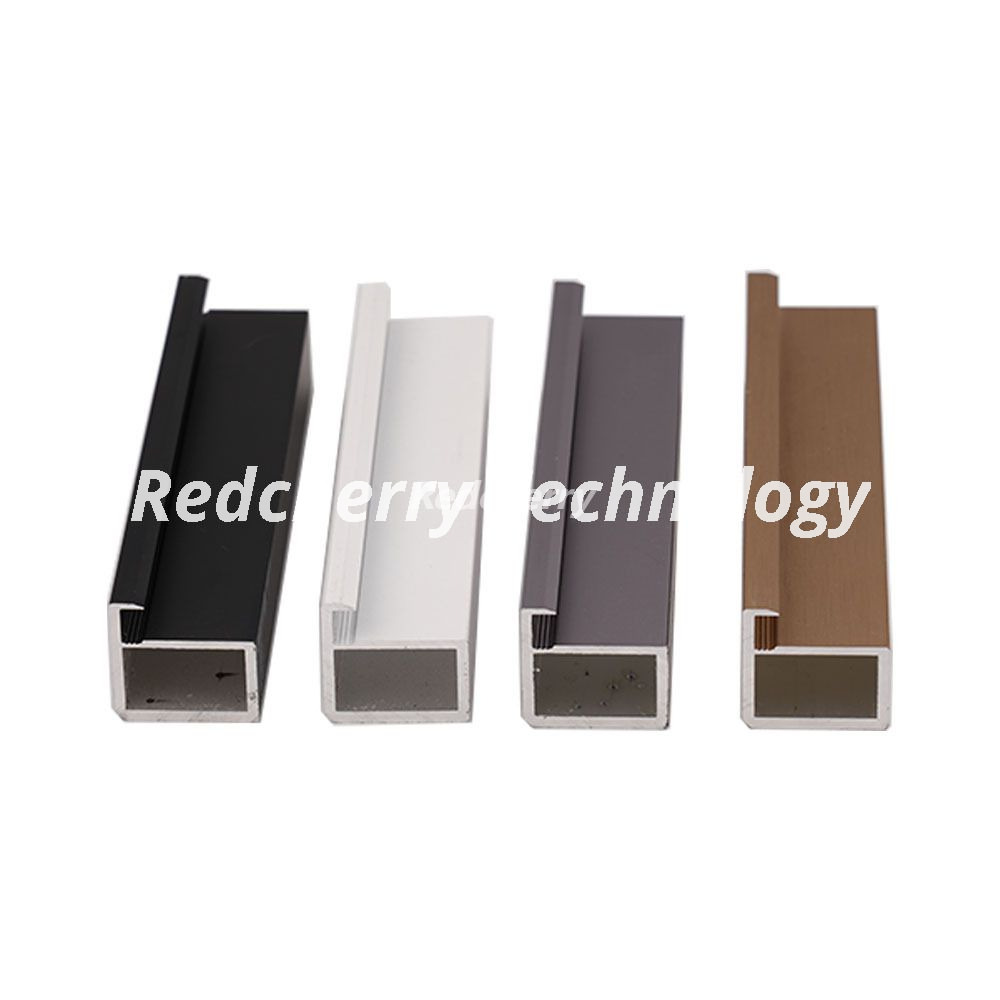
Modern sliding and bi-fold doors feature massive glass panels. Triple glazing exerts tremendous downward force on the bottom track. Aluminum can effortlessly support these heavy glass loads while maintaining a slim profile. You do not have to sacrifice structural integrity to achieve the minimalist, open-concept designs that developers demand today.
Not all metal performs the same way under stress. Selecting the precise alloy is critical. In the facade industry, the 6063-T5 aluminum alloy is the undisputed standard for architectural framing. It offers an exceptional surface finish and extrudes beautifully into intricate shapes. However, when a project demands higher wind load requirements, facade engineers will specify the 6061-T6 alloy for its enhanced tensile strength.
Look at a cross-section of a high-quality profile. You will see strategic variations in the metal. Custom die designs allow engineers to increase the wall thickness exclusively in high-stress areas. A standard residential window might use a 1.4mm wall thickness. A heavy-duty commercial door frame will upgrade to a 2.0mm or even 2.5mm thickness around the hinge mounting points and lock keeps. This localized reinforcement maximizes load-bearing capabilities exactly where the hardware mounts.
Furthermore, current industry trends highlight a massive shift in how we approach facade engineering. Global construction data shows a sharp increase in demand for climate-resilient, passive house designs. Architects are moving away from bulky traditional frames. Instead, the market demands ultra-slim sightlines that can withstand extreme coastal weather events. Extruded aluminum perfectly bridges this gap between minimalist aesthetics and hurricane-rated structural integrity.
The longevity of an exterior doorway is defined by its ability to fight off environmental degradation. Aluminum has a unique chemical advantage. The moment raw aluminum is exposed to the atmosphere, it instantly forms a microscopic, tightly bonded oxide layer. This natural barrier seals the underlying metal away from moisture and oxygen. It provides an innate resistance to rust that steel simply cannot replicate.
We do not just leave the metal raw. Modern manufacturing elevates this baseline durability through advanced surface treatments. Powder coating involves applying a dry powder to the frame and baking it in a curing oven. For exterior applications, we ensure the coating hits a strict thickness of 60 to 80 microns. This creates a durable color coat that withstands blistering UV rays and salty coastal breezes. Alternatively, anodizing artificially thickens the metal's natural oxide layer, resulting in an incredibly hard exterior. Sourcing custom frame extrusion profiles with proper surface finishing guarantees decades of flawless aesthetics.
Facility managers dread the costly repairs associated with termite damage and waterlogged wood. Extruded aluminum completely eliminates these maintenance headaches. The material is entirely impervious to pests, fungal decay, and moisture absorption. Even in environments with wild temperature swings, the door frame remains perfectly square. Your hinges will swing smoothly and your locks will align flawlessly for years.
The inherent rigidity of aluminum translates directly into superior design freedom. Because the metal is so strong, manufacturers can engineer incredibly thin frames that securely hold heavy glass. These narrow sightlines maximize natural light penetration and provide unobstructed panoramic views. This is the cornerstone of contemporary architecture.
The extrusion process is a playground for architectural creativity. We design dies with highly complex internal cavities. These hollow chambers hide unsightly electrical wiring for access control systems. We also extrude intricate tracks for sliding mechanisms and weatherstripping channels directly into the profile. This eliminates the need for secondary machining on the assembly line.
Aluminum no longer means a stark, industrial silver finish. Today's architectural frame extrusions offer a vast array of aesthetic options. Whether a project calls for a sophisticated matte black, a shimmering metallic bronze, or a highly realistic wood-grain sublimation that mimics natural timber, the metal can be finished to match the exact style of your space.
A persistent myth in the construction world is that metal frames are poor insulators. Solid aluminum does conduct heat. That is a scientific fact. However, modern engineering has completely solved this issue. Contemporary frames incorporate advanced polyamide thermal breaks. We insert a heavy-duty insulating barrier, typically ranging from 14.8mm to 24mm in width, directly into the center of the extrusion. This physical separation between the interior and exterior metal stops the transfer of heat and cold.
As the construction industry pivots toward sustainability, building materials must pull their weight. Aluminum is highly recyclable, retaining all of its structural properties even after being melted down. When combined with thermally broken designs, these frames significantly lower a building's overall HVAC load. This high level of thermal performance is a critical factor in helping commercial projects achieve prestigious green building certifications.
The homes of tomorrow are heavily automated. Extrusion profiles can be engineered with precise tolerances to seamlessly house automated opening mechanisms. Custom internal channels provide the perfect, concealed environment for smart security sensors, biometric scanners, and electronic locking hardware. The technology remains completely hidden while functioning flawlessly.
Navigating the procurement process requires a keen eye for manufacturing excellence. Do not just guess. Measure the materials. Buyers should check for exceptionally tight dimensional tolerances. Consistent wall thickness across the entire profile is vital for structural integrity. The surface finish must be defect-free, smooth to the touch, and uniform in color.
Never take a manufacturer's claims at face value. It is imperative to check for independent test reports. High-quality extrusions will carry verified ratings for wind load resistance, water penetration limits, and overall thermal transmittance. These documents provide proof that the doorway will perform exactly as engineered under real-world stress.
The complexity of die design and extrusion requires a partner who understands the entire lifecycle of the product. Partnering with an experienced factory minimizes production delays and guarantees strict quality control. Sourcing premium frame extrusion profiles from a trusted supplier ensures the success of your installation and delivers a robust return on investment.
The exact tolerances achieved during the extrusion process pay massive dividends once the materials arrive on the job site. Because every screw boss and interlocking joint is formed with microscopic accuracy, the assembly process becomes significantly faster. Installers spend less time forcing warped materials to fit and more time securing a perfectly plumb entryway.
Installers must first verify that the surrounding wall structure is perfectly plumb, level, and square. Rigid aluminum will not easily forgive an uneven foundation. Precise laser measurements are required before the frame ever touches the opening.
This phase involves assembling the custom profiles on the ground to confirm all mitered corners align perfectly. Once verified, the frame is positioned into the opening. Installers then apply appropriate weatherproof barriers and flashing tapes to prevent water intrusion around the perimeter.
Installers secure the frame to the building structure using the pre-designed screw bosses extruded directly into the metal. Following the structural anchoring, the team attaches the heavy-duty hinges, multi-point locking mechanisms, and automated smart hardware.
Selecting the right material is the most critical decision for any facade project. Aluminum frame extrusions are actively revolutionizing the construction industry by offering an unbeatable combination: commercial-grade structural strength, weatherproof durability, and cutting-edge design flexibility. Whether you are framing expansive sliding doors for a modern home or outfitting a high-traffic commercial facility, choosing extruded aluminum is a long-term investment in uncompromising quality. To elevate your next architectural endeavor, visit Red Cherry Aluminum at https://www.redcherryaluminum.com to explore custom manufacturing options and find the exact product parameters that fit your project requirements.
The 6063-T5 alloy is widely considered the industry standard for door and window framing. It offers a perfect combination of excellent extrudability, a superior surface finish quality for powder coating, and strong natural corrosion resistance. If the project involves massive commercial doors that require extra structural strength, the 6061-T6 alloy is frequently utilized.
When properly manufactured and treated, they are incredibly long-lasting. Equipped with advanced surface treatments like professional powder coating or anodizing, an extruded aluminum door frame can easily last 30 to 50 years or more. Unlike wood, they do not require regular sanding or repainting.
Yes, modern aluminum frames are highly energy efficient provided they are engineered with a thermal break. This heavy-duty internal insulating strip separates the interior and exterior halves of the frame. This barrier stops the transfer of heat and cold, drastically improving the building's overall thermal performance.
Absolutely. The extrusion process is inherently customizable. Manufacturers can design and cut custom steel dies to push the aluminum into virtually any geometric shape required by an architect. This allows for the integration of specialized weatherstripping channels and concealed smart-home hardware.
Aluminum vastly outperforms uPVC in both strength and longevity. Because aluminum is significantly stronger, it allows for much thinner frames and larger areas of unobstructed glass. Furthermore, aluminum is highly stable under extreme heat. Unlike uPVC, it will not degrade, become brittle, or discolor after years of exposure to harsh UV sunlight.
For standard residential windows, a wall thickness of 1.2mm to 1.4mm is common. However, for commercial door frames that endure heavy traffic and support large glass panes, industry standards dictate a minimum wall thickness of 2.0mm. High-stress areas around hinges often feature thicknesses of 2.5mm or more to prevent hardware tear-out.
A thermal break physically interrupts the continuous metal path from the outside of the frame to the inside. Manufacturers use specialized machinery to roll a rigid, low-conductivity polyamide strip into the center of the aluminum profile. Because polyamide does not conduct heat like metal does, it effectively blocks exterior winter cold or summer heat from radiating into the interior space.


