
Views: 0 Author: Site Editor Publish Time: 2026-10-23 Origin: Site


The incredible versatility of extruded metal in modern engineering is the backbone of agile manufacturing. Whether you are assembling an intricate industrial automation line, designing a vibration-isolated pump skid, or erecting a sleek architectural pavilion, the foundation of your success relies on choosing the correct materials. However, with countless shapes, alloys, and slot configurations flooding the market, selecting the exact extrusion for a specific project often feels overwhelming. I have seen poorly specified frames vibrate apart under the torque of a heavy-duty motor. A miscalculation here can lead to catastrophic structural failure, blown budgets, or frustrating assembly bottlenecks.
Fortunately, this comprehensive guide will navigate you through everything necessary to select the perfect Aluminum Frame Profiles tailored to your unique demands. We will explore core alloys, sizing standards, diverse applications, and critical selection criteria to keep your build on track and structurally sound.
Alloy Matters: Choosing between 6061 and 6063 aluminum alloys depends entirely on whether your priority is raw structural strength or a flawless aesthetic finish.
Size Dictates Strength: Profile series directly correlate to load-bearing capacity. Selecting the right dimensional footprint ensures project safety and longevity.
Modularity is King: T-slot systems offer unparalleled flexibility for industrial machinery. They allow for rapid field adjustments without a single weld.
Finish Protects: Surface treatments such as deep anodizing and powder coating are non-negotiable for harsh environments and architectural aesthetics.
The extrusion process forces heated raw billets through a precision-machined steel die under immense pressure. This manufacturing technique transforms shapeless metal into highly functional structural cross-sections ready for immediate deployment. But why choose this over traditional materials?
Historically, heavy carbon steel dominated industrial framing. Today, the high strength-to-weight ratio of extruded aluminum has completely flipped that paradigm. In practical terms, you can construct robust frameworks that weigh a fraction of their steel counterparts. This weight reduction drastically cuts shipping and handling costs. Furthermore, the commercial benefits of modular assembly are undeniable. Because these systems bolt together seamlessly, they entirely eliminate the need for specialized welding labor, expensive hot work permits, and tedious post-weld grinding. Coupled with its natural corrosion resistance, this framing thrives in both pristine indoor cleanrooms and harsh outdoor environments.
Not all metal is created equal. The specific alloy composition fundamentally dictates the ultimate yield strength, machinability, and surface finish quality of the extrusion. Understanding these metallurgical differences is the first critical step toward a successful build.
When your project demands uncompromising structural integrity, 6061 is the undisputed champion. Featuring high yield strength due to the addition of magnesium and silicon, it excels under intense physical pressure. Picture a heavy-duty robotic arm base or a custom CNC router vibrating at high speeds. This is exactly where 6061 steps in to absorb dynamic loads and high-stress forces without warping.
In contrast, if visual appeal and intricate shapes are your primary goals, 6063 is the superior choice. It boasts exceptional extrudability, allowing manufacturers to create complex geometries with ease. For instance, the premium Smart Charging Room For Scenic Spot profiles utilize high-grade 6063-T5 alloy. This specific temper delivers a robust yield strength exceeding 110 MPa while maintaining an absolutely flawless surface finish. Because it anodizes so beautifully, 6063 dominates modern architecture, outdoor enclosures, and any application where premium aesthetics and weather resistance are paramount.
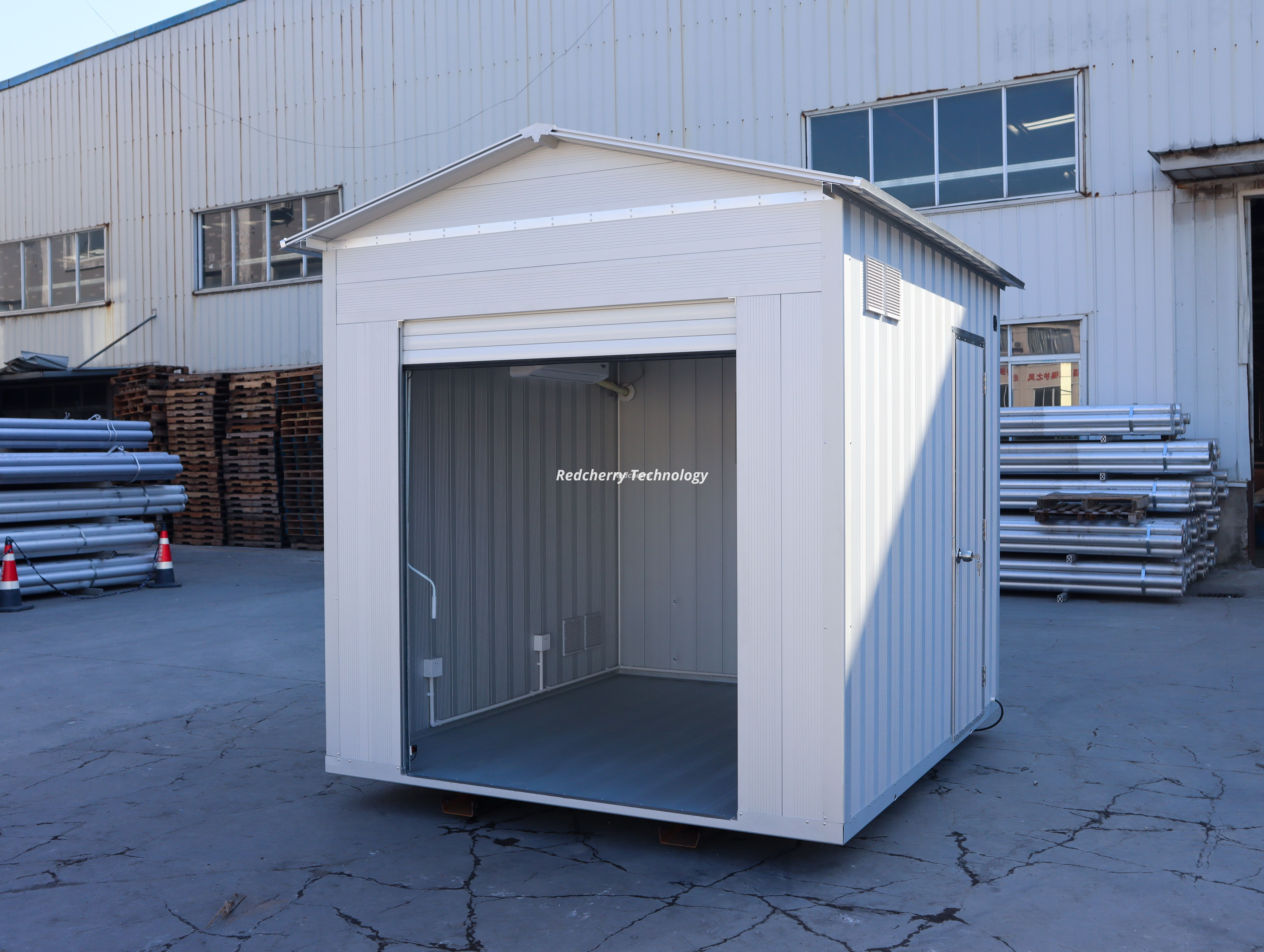
Looking at broader global industry shifts, there is a pronounced trend toward sustainable, rapid-deployment infrastructure. As urban planners and engineers push for eco-friendly solutions, we are seeing a massive departure from permanent welded structures. The market is experiencing a surge in demand for modular extrusion geometries that cater to specialized off-grid power stations and agile manufacturing environments. Understanding the standard shapes available is crucial for matching form to function.
The modular T-slot system revolutionized industrial design. By featuring continuous indented grooves along their length, these extrusions allow for infinite adjustability. Technicians can slide specialized drop-in nuts and fasteners anywhere along the rail. This makes it incredibly easy to attach fluid sensors, acrylic panels, or heavy mounting brackets without drilling a single hole.
While visually similar to their T-slot cousins, V-slots incorporate a distinct beveled edge inside the groove. This slight geometric tweak transforms the extrusion into a highly effective linear motion guide. In desktop automated equipment and laser engravers, specialized polycarbonate wheels ride seamlessly inside this V-shaped track to provide smooth movement along the axis.
Not every application benefits from open grooves. Closed-face or smooth profiles are absolutely essential in environments where strict hygiene is critical. In pharmaceutical cleanrooms or food-grade pumping facilities, smooth surfaces prevent the dangerous buildup of debris and bacteria. They provide all the structural benefits of internal fastening channels while keeping the exterior perfectly flush and easy to sanitize.
Matching the profile series to the physical demands of your project is the most critical step in the engineering process. Undersizing leads to dangerous instability and vibration, while oversizing wastes valuable budget. Below is a direct selection standard to help you specify the right footprint.
Profile Series | Typical Slot Width | Core Applications | Load Capacity Level |
|---|---|---|---|
2020 Series | 6mm | Sensor mounts, lightweight enclosures, display stands | Light-Duty |
3030 Series | 8mm | Workstations, 3D printer frames, medium guards | Medium-Duty |
4040 Series | 8mm / 10mm | Automated assembly lines, CNC frames, industrial carts | Standard Heavy-Duty |
8080 Series & Above | 10mm+ | Pump skids, massive robotic bases, structural pillars | Extreme Heavy-Duty |
The 2020 series measures 20mm by 20mm. These slender extrusions are best suited for lightweight DIY projects and compact enclosures. They require scaled-down hardware that keeps the overall footprint minimal. Moving up the scale, the 4040 series strikes the perfect balance between cost, overall weight, and structural rigidity. Walk into any modern automated factory, and you will see these extrusions forming ergonomic workstations and sprawling assembly lines. Finally, high-torque applications demand thick-walled, multi-slot behemoths like the 8080 series. I frequently specify these heavy-duty variants for massive fluid handling systems where structural deflection is simply not an option.
To truly grasp the commercial value of these materials, it helps to visualize them operating in the real world across diverse sectors.
The factory floor is where these extrusions shine brightest. They form the rigid skeletons for custom machine frames, safety guarding perimeters that protect floor workers, and complex conveyor systems. When dealing with fluid dynamics and motor torque, a properly braced aluminum frame absorbs vibration beautifully while keeping logistics flowing efficiently.
Beyond the factory walls, forward-thinking architects leverage these lightweight structures for striking exterior facades and modular interior partition walls. Innovation often happens outdoors. A prime example is the deployment of Aluminum Frame Profiles for scenic spot infrastructure. In remote locations, framing must be exceptionally durable and weather-resistant. Extruded aluminum fits this specialized niche perfectly, blending seamlessly into the natural environment while providing rugged protection for sensitive electrical components.
Before finalizing your bill of materials and placing an order, run through this comprehensive buyer checklist to ensure flawless execution on the shop floor.
Begin by meticulously assessing both static dead weight and dynamic loads such as moving parts, motor vibrations, or wind shear. Utilizing engineering deflection calculators ensures the chosen cross-section will not sag under stress over its lifespan. Next, accurately match the slot dimension to your required corner brackets and heavy-duty hinges. A mismatched T-nut will ruin a tight, secure fit during assembly.
Furthermore, consider exactly where the structure will live. Will it face coastal salt moisture or harsh chemical washdowns? These environmental variables directly dictate the necessary surface treatments. Finally, if your design is a prototype likely to expand, prioritize highly modular open-slot profiles. This foresight allows you to unbolt, reconfigure, and scale up operations later without scrapping the original framework.
Evaluating the quality of an extrusion goes far beyond checking the raw dimensions. The surface finish is your first line of defense against industrial wear and tear. Clear or color anodizing is an electrochemical process that penetrates the metal. It creates a hard, scratch-resistant oxide surface that will never peel. High-quality structural profiles typically feature an anodized film thickness of 10 to 15 microns, ensuring decades of corrosion resistance.
Alternatively, powder coating involves baking a dry powder onto the surface. This offers virtually unlimited custom color options and excellent UV protection for sun-drenched outdoor builds. When inspecting a newly arrived batch from your supplier, pay close attention to straightness tolerances. Look for clean, sharp extrusion lines free of die marks. This indicates a manufacturer maintaining rigorous tooling standards.
Ultimately, sourcing the ideal framework boils down to a deep understanding of your specific load requirements, selecting the appropriate alloy like 6061 or 6063, and locking in the right size series. Investing the time to meticulously select the correct extrusion upfront pays massive dividends. It saves procurement money, prevents dangerous structural failures, and guarantees a polished, professional finish. When you are ready to bring your engineering blueprints to life, ensure you source your Aluminum Frame Profiles from trusted industry manufacturers like Red Cherry Aluminum to guarantee precision, durability, and exact specification matching for your next project.
The load capacity heavily depends on the unsupported length of the extrusion and exactly how the weight is applied. A concentrated point load in the center behaves very differently than an evenly distributed load across the span. Generally speaking, a standard 4040 profile can safely support hundreds of pounds over short spans of a few feet. For critical structural applications, always consult engineering deflection calculators provided by the manufacturer.
Yes, they are inherently safe from traditional red rust because aluminum contains absolutely no iron. Instead of rusting, the metal naturally forms a microscopic, protective oxide layer the moment it is exposed to air. When this material is professionally anodized, its resistance to corrosion skyrockets, making it an exceptional, maintenance-free choice for marine environments and outdoor applications.
Absolutely. Aluminum is a highly machinable metal. You can easily cut these extrusions in your own workshop using a standard miter saw equipped with a high-tooth-count, non-ferrous metal blade. While DIY modifications are straightforward, ordering factory-cut lengths is highly recommended if your project requires absolute precision and perfect squareness for the joints.
The primary distinction lies in the internal groove geometry. T-slots feature a squared-off channel designed purely for structural fastening and joining static components together. V-slots possess a specially beveled inner edge. This specific angle is engineered to allow V-wheels to roll smoothly and tightly along the track, making them the go-to choice for linear motion systems.
The beauty of modular framing is the sheer variety of connection methods available without ever needing to hire a welder. Common fastening techniques include external cast corner brackets for quick assembly, hidden internal corner connectors for a sleek look, flat joining plates for extending length, and simple T-nuts paired with hex bolts. The right choice depends on whether you prioritize maximum joint strength or a clean aesthetic.
In the industrial manufacturing sector, raw aluminum extrusions are typically produced and shipped in standard lengths of 3 meters to 6 meters. However, premium suppliers offer precision cutting services, allowing engineers to order exact custom lengths down to the millimeter. This eliminates shop-floor waste and drastically speeds up the final assembly process.
Calculating deflection requires knowing the moment of inertia for the specific profile cross-section, the modulus of elasticity for the chosen alloy, the applied load, and the unsupported span length. Engineers use standard beam deflection formulas to ensure the profile will not bend past an acceptable tolerance under dynamic or static stress. Most reputable extrusion manufacturers provide specialized software or technical datasheets to simplify this exact calculation.


