
Views: 0 Author: Site Editor Publish Time: 2026-10-23 Origin: Site


Effective thermal management represents a critical financial lever in any industrial operation. It goes far beyond routine engineering requirements. Selecting the optimal heat exchanger components can literally save facilities thousands of dollars annually. These savings manifest in drastically reduced energy consumption and lower deferred maintenance costs. At the heart of this optimization are specialized cylindrical components featuring extended surface areas. We design these elements specifically to accelerate and maximize heat transfer rates between diverse fluids or gases.
Recent market analyses indicate a massive shift in heat transfer engineering. With global industries facing stringent decarbonization mandates, the era of oversized and inefficient thermal systems is rapidly closing. Facilities now demand highly compact units capable of surviving aggressive thermal cycling. We are seeing a distinct industry trend where plant operators prioritize lifecycle costs over the initial purchase price. Engineers are moving away from traditional bulky setups. They require materials that withstand severe mechanical stress without sacrificing performance. Amidst a wide range of available configurations, the embedded fin design stands out as the premier choice. It is particularly favored for high-stress applications where equipment failure is simply not an option.
We developed this guide specifically for engineers, procurement managers, and strategic decision-makers. By exploring the mechanics, comparing designs, and weighing distinct advantages, you will be fully equipped to make an informed and cost-effective purchasing decision for your next facility upgrade.
Efficiency Boost: Extended surface configurations drastically outperform standard bare pipes by maximizing the active heat transfer area. This enables significantly more compact heat exchanger designs.
Design Variety: Multiple variations exist, including extruded, wrap-around, and welded types. However, the embedded mechanical bond is highly favored for environments plagued by extreme temperatures and heavy vibrations.
Cost vs. Performance: Selecting the ideal tubing requires a strict balancing act. You must align thermal dynamics and material compatibility with overall budget constraints.
Direct Sourcing: Partnering directly with a manufacturer guarantees superior quality control. It also accelerates lead times and provides access to highly economical solutions.
To understand the value of these components, we must look at basic thermodynamics. Heat transfer is fundamentally limited by the surface area available for exchange. By attaching thin metal appendages to the exterior of a base pipe, engineers dramatically increase the surface area in direct contact with the surrounding outside fluid or gas. Why does this matter? This structural enhancement directly improves the overall heat transfer coefficient. It allows thermal energy to dissipate or absorb at a vastly accelerated rate.
When comparing extended surface components to traditional bare pipes, the performance differences are stark. Bare pipes offer a smooth and uninterrupted flow but suffer from limited surface contact. You would need massive equipment bundles to achieve your desired thermal targets. In contrast, extended variations deliver superior heat transfer efficiency within a fraction of the space.
Engineers consistently upgrade to extended surface options to reduce the equipment footprint while maximizing output. Adding these external elements can slightly increase the pressure drop on the shell side. It may also require specific maintenance protocols to prevent fouling. However, the space-saving and efficiency benefits overwhelmingly justify the transition in modern facility designs.
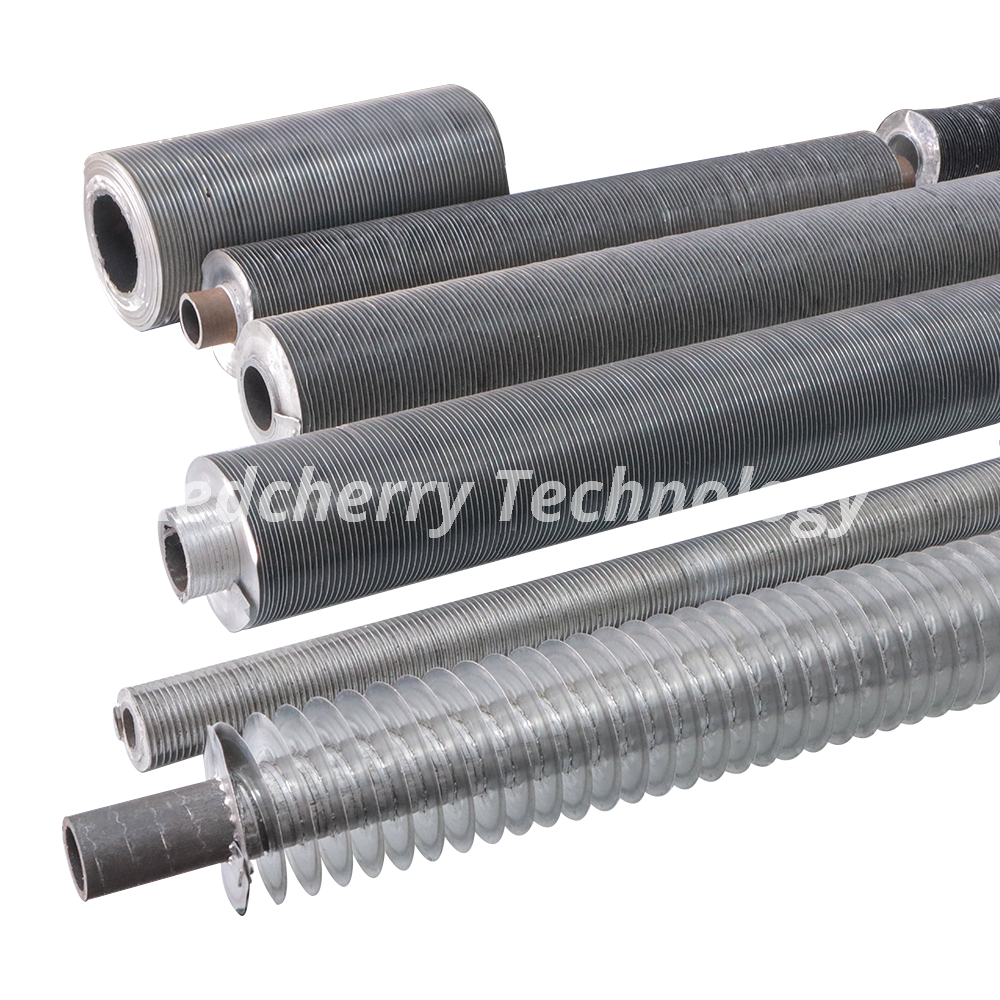
To make the best engineering decision, you must understand the structural differences between available models. Below is a core comparison of the industry standard designs.
Design Type | Attachment Method | Max Temperature | Vibration Resistance | Best Application |
|---|---|---|---|---|
Extruded | Cold-rolled from an outer aluminum sleeve | 300°C | High | Highly corrosive environments |
Embedded G-Type | Mechanically locked into a plowed groove | 400°C | Excellent | High-vibration and high-heat systems |
Wrap-around L-Type | Tension-wrapped around the base pipe | 150°C | Low to Medium | Low-temperature air coolers |
High-Frequency Welded | Continuously welded to the base metal | Over 500°C | Excellent | Heavy-duty industrial boilers |
Manufacturers produce extruded variants through a highly specialized bimetallic extrusion process. An outer aluminum sleeve is compressed over an inner core pipe. The external profiles are essentially squeezed out of the aluminum sleeve itself. This seamless construction provides excellent corrosion resistance because the base pipe remains entirely protected from the external atmosphere.
For operations demanding rugged reliability, the embedded design is paramount. The manufacturing process involves plowing a narrow groove directly into the outer wall of the base metal. A continuous strip of material is then tightly wound and embedded into this groove. Finally, the edges of the groove are peened shut. This action mechanically locks the element securely in place. This aggressive mechanical bond ensures that a G-Type Finned Tube maintains strict structural integrity even under severe mechanical stress and thermal expansion.
These variations utilize a wrap-around technique where the strip is formed into an L shape at the base. This maximizes contact with the core pipe. Similar variations feature overlapping bases for added corrosion protection or incorporate a knurling process for enhanced grip. Generally, these tension-wound designs are best suited for lower-temperature applications where aggressive locking mechanisms are not strictly necessary.
High-frequency welded pipes are the heavy-duty workhorses of the industry. They feature steel profiles continuously welded to a steel base. This makes them ideal for extremely corrosive and high-pressure environments. On the other end of the spectrum, low profile options feature very short and thick profiles extruded directly from the base metal. Engineers frequently deploy these in liquid-to-liquid heat exchangers.
One of the most compelling reasons senior engineers gravitate toward the embedded design is its thermal resilience. Standard wrap-around profiles can loosen as the base metal expands under heat. However, the embedded configuration seamlessly withstands constant operating temperatures up to 400°C. Because the material is locked into the pipe wall, the expansion rates remain synchronized. This prevents detachment and eliminates thermal bridging failures.
Imagine a petrochemical plant running at peak capacity. The constant hum of massive compressors and fluid pumps creates heavy and relentless vibrations. These forces can literally shake standard components apart. The mechanical lock of the embedded profile actively prevents unspooling during these intense vibrations. Furthermore, it easily endures aggressive thermal cycling without degrading the bond strength.
To achieve these results, precise manufacturing geometry is required. A standard G-Type Finned Tube typically utilizes a base pipe outer diameter ranging from 16mm to 38mm. The aluminum fins are usually 0.3mm to 0.5mm thick, with heights spanning 10mm to 16mm. The pitch is carefully calibrated between 2.1mm and 3.0mm. This specific parameter setup maximizes the air-side heat transfer coefficient while maintaining absolute structural rigidity.
Beyond the durability of specific designs, utilizing extended surface components broadly elevates system-wide performance. By facilitating faster thermal exchange, these elements drastically reduce the total energy consumption required to heat or cool industrial fluids. This enhanced efficiency directly translates to lower utility bills and a significantly reduced carbon footprint.
Because these elements transfer heat far more efficiently than bare counterparts, engineers are not forced to design sprawling heat exchanger bundles. Instead, we can engineer smaller and lighter units that achieve the exact same thermal output. This reduction in sheer physical size saves substantial capital on structural supports, housing materials, and facility floor space.
Selecting the right thermal component is not a guessing game. It requires a rigorous assessment based on strict operational thresholds. Use the following criteria to standardize your selection process.
You must accurately match material types to your expected temperature limits. If your process fluid remains below 150°C, standard wrap-around profiles are acceptable. However, if your process involves high-heat exhaust or aggressive steam up to 400°C, the embedded configuration becomes the mandatory engineering standard. Pushing a wrap-around design past its temperature limit guarantees premature failure.
Material selection is just as crucial as the physical design. The chemical composition of your fluids dictates your base metal. Carbon steel suffices for standard applications. Highly corrosive offshore environments demand stainless steel or specialized titanium alloys. Aluminum is predominantly chosen for the external profiles due to its lightweight nature and excellent thermal conductivity, provided the external atmosphere is not highly caustic.
Performance is critical, but procurement must always balance the ledger. Embedded components offer a premium balance of upfront cost and long-term performance. By mitigating early replacement costs and minimizing maintenance downtime, they deliver exceptional return on investment. Sourcing an Economical G-Type Finned Tube is a strategic move that aligns both engineering demands and financial constraints.
For procurement managers, the pain points of sourcing remain consistent. You face unpredictable costs, extended lead times, and questionable reliability. Cutting out the middleman and working directly with a manufacturer solves these issues immediately. Direct partnerships yield better volume pricing and immediate access to technical engineering support. You also benefit from stringent quality control protocols that third-party distributors simply cannot guarantee.
When vetting a supplier, look beyond the initial quote. Ensure the manufacturer holds relevant ISO certifications to prove their commitment to international quality standards. Verify their capability to provide custom pitches, heights, and base pipe dimensions tailored to your specific schematics. Transparent delivery timelines are non-negotiable to keep your facility upgrades on schedule.
The harsh conditions of the petrochemical sector demand rugged components. Air-cooled heat exchangers are ubiquitous in refineries. Operators utilize them to cool process fluids where water is scarce or treatment is too expensive. In these high-vibration and high-heat scenarios, the G-Type Finned Tube is heavily deployed to ensure continuous operational flow without sudden maintenance stops.
Beyond refineries, thermal exchange elements are critical in power generation. They act as the core components in economizers and boiler systems. They recover waste heat to drastically improve overall plant efficiency. Furthermore, large-scale commercial HVAC systems rely on these extended surfaces to manage climate control efficiently across massive square footages.
Transitioning from traditional bare pipes to advanced extended components is a necessary evolution. It is vital for any facility aiming to maximize thermal efficiency and minimize operational footprints. Among the various designs available, the mechanically bonded embedded configuration clearly distinguishes itself. It offers top-tier durability, exceptional resistance to thermal cycling, and steadfast reliability under heavy vibration.
We highly recommend that engineering and procurement teams carefully weigh specific temperature limits, environmental corrosiveness, and budget constraints using the frameworks provided above. Making the right selection upfront prevents costly downtime and emergency maintenance later.
If you are ready to upgrade your thermal management systems with a solution that perfectly balances performance and cost, we encourage you to explore direct manufacturing options. Reach out to request a custom quote or engineering consultation for the Economical G-Type Finned Tube to ensure your next project is an absolute technical and financial success.
It is a configuration where the aluminum profile is mechanically locked into a specialized groove plowed directly into the outer wall of the base metal. This aggressive mechanical bond ensures high heat transfer efficiency and exceptional structural durability, even under extreme operational stress.
These components provide a significantly larger surface area in contact with the surrounding medium. This drastically improves heat transfer efficiency. It allows engineers to design much smaller and lighter equipment, ultimately lowering long-term operational and energy costs.
Due to the secure design that synchronizes thermal expansion between the external profile and the base metal, these units can operate safely and efficiently in harsh environments. They easily handle continuous temperatures reaching up to 400°C.
Standard maintenance practices include high-pressure water washing, specialized chemical cleaning, or the use of compressed air to remove debris and fouling. Notably, the deeply embedded nature of the mechanical bond makes it highly resilient. This prevents structural damage during aggressive cleaning routines.
While tension-wound models might appear cheaper on the initial purchase order, the embedded configuration is often the most cost-effective choice over the equipment lifecycle. Its superior longevity and resistance to thermal cycling prevent early degradation, saving facilities substantial money on replacement costs and unexpected downtime.
Fin pitch selection depends entirely on the cleanliness of the external fluid or gas. For clean air applications, a higher density pitch between 2.1mm and 2.5mm maximizes heat transfer. If the environment is dusty or prone to severe fouling, engineers must specify a wider pitch to allow for easier cleaning and prevent airflow blockage.
The base pipe is typically fabricated from carbon steel, stainless steel, or copper alloys, depending on the internal fluid's corrosiveness and pressure. The external profiles are overwhelmingly made from aluminum due to its exceptional thermal conductivity, lightweight properties, and cost-effectiveness.


