
Views: 0 Author: Site Editor Publish Time: 2026-10-23 Origin: Site


The evolution of modern manufacturing has sparked a dramatic shift in facility construction and mechanical design. For decades, heavy and rigid welded steel structures dominated factory floors. Today, engineers and facility managers consistently face a frustrating challenge. They need a framing material that perfectly balances immense strength, manageable weight, cost-efficiency, and ultimate modularity. Enter extruded aluminum. This guide dives deep into the structural mechanics, commercial value, and practical applications to help you specify the exact extrusion for your next demanding project.
Unmatched strength-to-weight ratios make these extrusions ideal for heavy-duty mechanical engineering and automated robotics.
T-slot modularity completely eliminates welding, drastically slashing assembly time and specialized labor costs.
Zero maintenance and inherent corrosion resistance deliver a vastly superior long-term return on investment.
Advanced grooved multi-chamber designs solve traditional load-bearing limitations to offer extreme structural integrity.
Look at the modern manufacturing landscape. We are witnessing an accelerating shift toward agile infrastructure and lightweighting. Monolithic production lines are obsolete. Industry 4.0 demands absolute modularity. Facilities must pivot production rapidly to accommodate shorter product life cycles and customized orders. Consequently, the demand for versatile framing solutions has skyrocketed. Furthermore, in sectors like electric vehicle manufacturing and automated robotics, minimizing the dead weight of moving structures is critical for energy efficiency and motor longevity. Extruded aluminum perfectly answers these market trends. It acts as the foundational skeleton for next-generation automated systems and smart factories.
Constructing a machine base or a material handling rack used to mean relying exclusively on welded carbon steel. Steel is undeniably strong. Yet, it is exceptionally heavy and highly prone to rust. It also requires highly skilled welders to assemble. Once a steel frame is welded, it becomes permanent. Modifying it requires grinding, cutting, and re-welding. On a busy factory floor, downtime kills profitability.
In contrast, modular aluminum systems bolt together effortlessly. A single technician armed with a hex key and standard fasteners can assemble, adjust, or completely tear down a structure in hours. This sheer adaptability is exactly why project managers standardize these extrusions across their facilities.
Feature | Welded Carbon Steel | Standard Aluminum Extrusion | Grooved Multi-Chamber Aluminum |
|---|---|---|---|
Assembly Speed | Slow and labor-intensive | Extremely fast | Extremely fast |
Modularity | None | High | High |
Load Capacity | Excellent | Moderate | Excellent |
Maintenance | High risk of rust | Zero maintenance | Zero maintenance |
Aluminum naturally weighs roughly one-third as much as steel. Do not mistake this lightweight nature for weakness. Through precise geometric engineering and high-yield alloys, these extrusions easily support massive industrial loads. This weight reduction directly translates into lower shipping costs and safer on-site handling without sacrificing structural integrity.
Furthermore, aluminum naturally forms a microscopic protective oxide layer when exposed to air. Paired with advanced surface treatments like clear or black anodizing, the metal becomes virtually immune to rust and degradation. This makes it an ideal candidate for harsh environments, sterile pharmaceutical cleanrooms, or outdoor structural applications.
The true ingenuity lies in the "no-weld" assembly. Instead of managing heavy welding gear and toxic fumes, assembly teams simply slide T-nuts into the continuous grooves of the profile. Brackets, hinges, and custom components mount anywhere along the length of the Industrial Aluminum Profiles. If a production line needs reconfiguration next year, the framework unbolts and repurposes instantly.
Every material has its limitations. Objective evaluation is crucial for engineering success. A common objection to aluminum framing is potential deflection under extreme static loads. A standard lightweight profile might flex under a massive machine tool. How do we solve this? We look at advanced structural geometries.
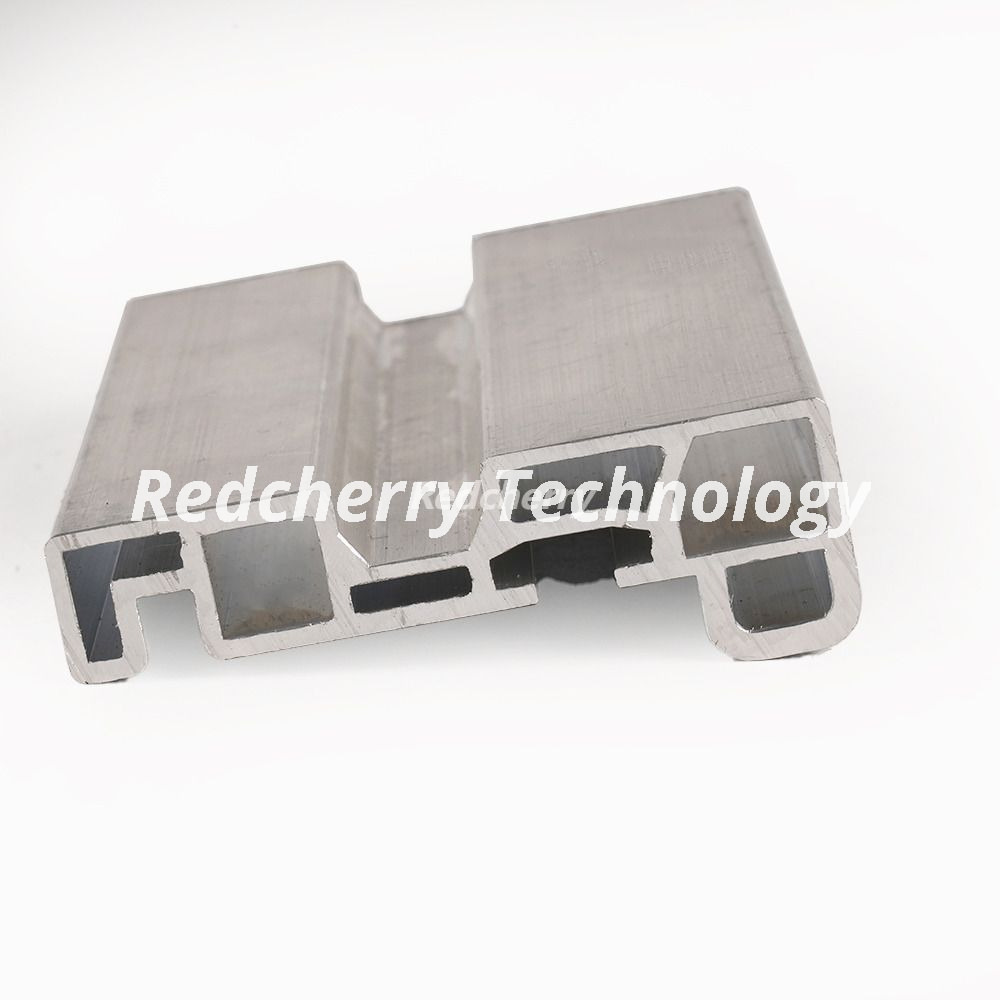
Multi-chamber designs incorporate internal structural webbing. This acts like a truss system inside the profile itself. It exponentially increases rigidity and torsional strength without adding excessive bulk. For projects requiring maximum structural integrity, you need specific engineering parameters. Looking at high-performance Industrial Aluminum Profiles from industry leaders, we see concrete specifications that guarantee performance:
Alloy Grade: Utilizing 6061-T6 or 6063-T5 for optimal tensile and yield strength.
Structural Design: Multi-chamber internal webbing engineered for high torsion resistance and dynamic load bearing.
Groove Specifications: Precision 8mm or 10mm T-slots designed for heavy-duty fastener retention.
Surface Treatment: Anodized coating depths reaching 10 to 15 microns for industrial-grade scratch and corrosion resistance.
These parameters transform a basic metal frame into a heavy-duty structural asset capable of handling intense dynamic vibrations.
Stop guessing your structural needs. Use this concrete selection matrix to specify the exact materials for your next build.
Step 1: Define the Load Profile. Calculate both the static dead weight of your equipment and the dynamic forces generated by moving parts. If you are building a lightweight safety guard, a standard 40x40 millimeter profile works perfectly. If you are supporting a multi-axis CNC machine, you must specify a heavy-duty multi-chamber extrusion to prevent deflection.
Step 2: Specify the Alloy. The 6000 series is the undisputed gold standard for structural extrusions. Choose 6063 for an excellent surface finish and standard framing applications. Upgrade to 6061 when your project demands maximum yield strength for heavy structural components.
Step 3: Select the Surface Finish. The finish dictates environmental resilience. Clear anodizing provides excellent baseline protection against oxidation. Black anodizing offers a sleek aesthetic while reducing light reflection in vision-system applications. For extreme chemical resistance, specify custom powder coating.
Step 4: Standardize Your Hardware. A structural frame is only as reliable as its weakest joint. Do not compromise on connection hardware. Invest in high-quality drop-in T-nuts, heavy-duty die-cast gussets, and hidden corner brackets to ensure your Industrial Aluminum Profiles remain rigid and safe over their entire lifespan.
In the realm of robotics and automation, precision and weight dictate success. Engineers utilize these profiles to construct rigid machine bases, lightweight supports for high-speed robotic arms, and automated conveyor chassis. The vibration-dampening qualities of multi-chamber designs are particularly valuable here.
Lean manufacturing principles rely on continuous improvement and adaptability. Factory floors leverage Industrial Aluminum Profiles to build ergonomic packing stations tailored to individual worker heights. They also construct custom tool shadow boards and mobile material handling carts that modify on the fly.
The push for vehicle lightweighting has driven immense adoption in the transportation sector. Extrusions frame commercial vehicles, secure delicate automotive parts during transit, and securely mount heavy electric vehicle battery enclosures.
While raw carbon steel possesses a higher ultimate tensile strength by volume, aluminum extrusions are intelligently engineered to handle exceptionally heavy loads. Increased wall thickness and complex multi-chamber geometries provide more than enough strength for automation and structural applications while offering far superior modularity.
The primary difference lies in mechanical properties. 6061 offers higher overall yield strength, making it the preferred choice for high-stress applications. Conversely, 6063 provides a smoother surface finish and better extrudability. It remains the most cost-effective choice for standard framing systems.
Load capacity depends on the profile dimension, wall thickness, alloy grade, and the unsupported span length. Engineers use standard beam deflection formulas to calculate maximum loads. For critical structures, always consult manufacturer deflection tables or use structural analysis software to ensure the design remains within safe bending limits.
Precision cutting requires a specialized miter saw equipped with a non-ferrous metal cutting blade. The blade must have a high tooth count and a negative hook angle to prevent grabbing the material. Always use a cutting lubricant to ensure a clean, burr-free edge and to prolong the life of the blade.
Yes, absolutely. Aluminum naturally forms a protective oxide layer upon exposure to the atmosphere. Because most industrial profiles undergo a deep anodizing process, they are highly resistant to weather, moisture, and corrosion. This makes them perfect for outdoor structures, including solar panel framing and architectural facades.
Extruded aluminum has undeniably become the backbone of modern agile manufacturing and structural engineering. It offers a rare, unbeatable combination of high-tensile strength, infinite modularity, and long-term cost savings. Traditional welded steel simply cannot match this versatility. Whether you are piecing together a simple ergonomic workstation or engineering a highly complex automated assembly line, taking the time to select the right extrusion guarantees project success.
Ready to upgrade your facility infrastructure? Evaluate your specific load requirements and choose a framing solution that delivers ultimate reliability. Explore the high-performance Industrial Aluminum Profiles at Red Cherry Aluminum to find the exact engineering parameters, modular accessories, and heavy-duty multi-chamber designs your next project demands.


