
Views: 146 Author: Site Editor Publish Time: 2026-09-23 Origin: Site


North American manufacturing has historically faced strict physical limits regarding aluminum extrusion. Tonnage ceilings forced engineers to design complex, multi-part assemblies for large structural components. Welding or fastening smaller extrusions creates compounding costs, adds weight penalties, and introduces structural vulnerabilities. This becomes highly problematic when sourcing large-diameter or heavy-wall components for aerospace, defense, mass transit, and infrastructure. The deployment of ultra-large 16,000-ton capacity extrusion presses in North America changes this reality entirely. We are witnessing a fundamental shift in procurement and structural engineering. Engineering teams can now specify monolithic structural shapes and oversized Aluminum Extrusion Tube components directly, bypassing legacy fabrication bottlenecks. This massive upgrade in pressing force eliminates the need to compromise on design, allowing for seamless, high-strength profiles that meet the rigorous demands of heavy industry.
Part Consolidation: Ultra-large presses eliminate the need for multi-part assemblies, reducing failure points and assembly labor.
Advanced Alloy Processing: High-tonnage capabilities allow for the extrusion of harder, aerospace-grade alloys (2000 and 7000 series) into complex, large-scale profiles.
Unprecedented Dimensions: Engineers can now specify aluminum extrusion tube diameters and structural widths previously unavailable from domestic suppliers.
Supply Chain Resilience & Future-Proofing: Domesticating the production of mega-extrusions—with new, massive press lines coming online—reduces reliance on offshore heavy manufacturing and shortens lead times for critical defense and infrastructure projects.
Standard press capacities typically range from 3,000 to 8,000 tons across most domestic facilities. These machines impose strict maximum circle size limitations on engineers. You simply cannot push massive profiles through them. The circumscribing circle size dictates the maximum profile width a press can handle. An 8,000-ton press generally maxes out around a 14-inch to 16-inch circle size. If your design requires a 24-inch wide panel, a legacy press cannot produce it. Insufficient pressure restricts the ability to force hard alloys through complex dies. The extrusion ratio must remain within specific limits. If you attempt to push beyond the press limits, you compromise structural integrity immediately. The metal flow becomes highly uneven inside the die cavity. Grain structures weaken, leading to unpredictable mechanical properties. Engineers hit a hard wall when designing large components. They must slice their ideal designs into smaller, extrudable pieces.
Maximum circle sizes restrict profile width and height severely, forcing modular designs.
Lower pressure fails to push 7000-series alloys efficiently, limiting material selection.
Slower ram speeds increase production time for complex shapes, driving up run times.
Die friction causes surface tearing on heavy-wall profiles when tonnage is inadequate.
Inadequate quenching capabilities fail to cool massive cross-sections uniformly, ruining the temper.
Legacy workarounds hide massive operational costs on the shop floor. Welding labor consumes hundreds of hours per project. Inspecting those welded joints requires expensive non-destructive testing protocols like dye penetrant or X-ray inspection. Fasteners add significant dead weight to the final assembly. Every single joint increases the risk of fatigue failure under dynamic loads. Modern structural procurement demands better outcomes. Success means maximizing strength-to-weight ratios while eliminating secondary operations entirely. A single extruded shape outperforms a welded assembly every time. You remove the heat-affected zones caused by welding. Heat-affected zones can reduce the local yield strength of 6061-T6 aluminum by up to 50 percent. You eliminate the galvanic corrosion risks associated with dissimilar metal fasteners.
Manufacturing Metric | Legacy Multi-Part Assembly | Monolithic Mega-Extrusion |
|---|---|---|
Structural Integrity | Compromised by heat-affected zones at weld seams | Uniform grain structure with continuous strength |
Weight Penalty | High due to fasteners, overlapping joints, and weld filler | Low due to optimized cross-sections and zero fasteners |
Assembly Labor | Extensive welding, drilling, fixturing, and fastening required | Minimal to none; parts arrive in near-net shape |
Inspection Burden | Complex non-destructive testing required for every individual weld seam | Streamlined testing performed on a single continuous profile |
Corrosion Resistance | Vulnerable at dissimilar metal joints and weld locations | Highly resistant due to uniform material composition |
New 16,000-ton presses enable massive dimensional upgrades. You can now procure large-diameter, seamless, and heavy-wall Aluminum Extrusion Tube profiles domestically. High-tonnage extrusion relies on immense physics to achieve these sizes. Increased pressure ensures uniform grain structure across massive cross-sections. The metal flows perfectly through the die, filling every cavity with consistent density. This creates a stronger, more reliable final product. You no longer have to roll and weld plate aluminum to create large cylindrical structures. The press extrudes them seamlessly in one continuous push. A 16,000-ton press can handle billets weighing several thousand pounds, pushing them through dies that accommodate circle sizes exceeding 24 inches. This capability fundamentally changes how engineers approach large-scale fluid transport, structural columns, and pressure vessels.
Immense hydraulic pressure forces metal through massive dies without stalling the ram.
Friction control prevents surface defects on large outer diameters during the push.
Advanced quenching systems cool massive profiles uniformly to lock in the required temper.
Automated stretchers straighten heavy extrusions post-quench effectively, removing residual stress.
Seamless mandrel extrusion produces perfectly concentric tubes with zero weld seams.
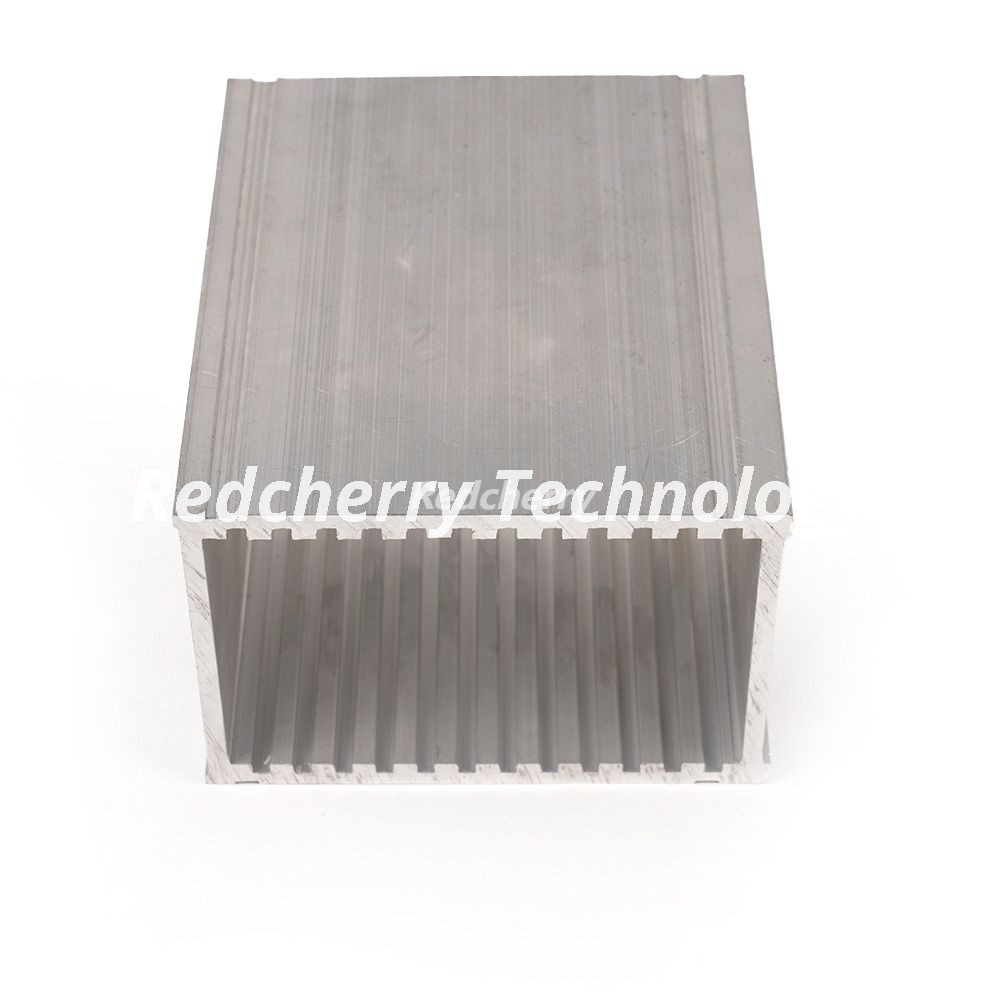
Engineers often express skepticism regarding large extrusions and dimensional accuracy. They assume bigger means sloppier tolerances. Modern mega-presses prove this assumption wrong. They maintain tight tolerances and straightness over incredibly long lengths. Advanced control systems monitor the push in real-time, adjusting ram speed and billet temperature dynamically. Isothermal extrusion practices keep the exit temperature of the profile constant. This prevents dimensional variations from the front of the extrusion to the back. These precision custom solutions drastically reduce post-extrusion machining requirements. You get near-net shapes straight from the press runout table. This precision allows for interlocking massive panels without extensive edge milling or surface facing. When assembling railcar floors or ship decks, the tongue-and-groove joints must align perfectly over 40-foot lengths. High-tonnage presses deliver this exact consistency.
Smaller presses struggle heavily with high-strength, low-extrudability alloys. Mega-presses handle them easily. You can push 7075 and 2024 alloys into massive shapes. These materials remain absolutely critical for defense and aerospace applications. The extreme pressure prevents surface tearing and internal defects during the extrusion process. Hard alloys require immense force to overcome their natural flow stress. A 16,000-ton press provides the exact force necessary to yield flawless aerospace-grade profiles. You achieve the mechanical properties of forged billet with the geometric complexity of an extrusion. Pushing a 7000-series alloy requires precise temperature control and massive hydraulic force to prevent the metal from cracking as it exits the die. The sheer power of a mega-press keeps the metal flowing smoothly, ensuring the internal grain structure remains intact and free of micro-fractures.
Seamless, large-scale tubes serve mission-critical roles in modern defense. Aerospace engineers use them directly for missile housings and rocket fuselage sections. They form the primary backbone of aircraft structural frameworks. Military vehicle armor utilizes heavy-wall profiles for superior blast resistance and ballistic deflection. Monolithic structures eliminate weak weld seams in these extreme environments. When a vehicle encounters an explosive force, a weld seam acts as a primary failure point. Solid extrusions absorb and distribute the kinetic energy far more effectively. The ability to extrude a complete, seamless cylinder out of 7075 aluminum means defense contractors no longer need to machine these parts out of solid forged blocks. This saves thousands of hours of machining time and reduces material waste drastically.
Seamless missile and rocket motor housings withstand extreme internal pressures without failing.
Heavy-lift aircraft wing spars and fuselage frames reduce overall flight weight significantly.
Armored vehicle blast-resistant underbelly panels deflect explosive forces away from the crew compartment.
Naval vessel superstructure components resist saltwater corrosion naturally without heavy coatings.
Portable military bridge decking and support beams deploy rapidly in the field due to their light weight.
Wide-profile extrusions transform transportation manufacturing from the ground up. Electric vehicle battery enclosures require massive, leak-proof aluminum structures to protect volatile cells. Mass transit railcar bodies rely on wide, interlocking panels to form the passenger cabin quickly. Lightweight commercial trailer components maximize legal payload capacity on highways. Custom large-scale extrusions optimize automotive distribution networks. They reduce the tare weight of transport vehicles significantly. Lighter transport vehicles consume less fuel and carry more cargo per trip. A single extruded floor panel for a subway car can replace a dozen smaller welded components. This accelerates the assembly line and ensures the floor remains completely watertight. The structural rigidity of these large panels also improves the crashworthiness of the transit vehicle.
Shipbuilding demands superior corrosion resistance in harsh saltwater environments. Massive monolithic aluminum profiles deliver exactly that without heavy protective coatings. Aluminum bridge decking benefits from immense load-bearing capacity and rapid installation times. Extruded aluminum outperforms welded steel in marine environments consistently. It requires far less maintenance over its operational lifespan. It installs faster because the components weigh a fraction of their steel counterparts. You eliminate the need for heavy-lift cranes during many phases of construction. Shipyards can weld large extruded panels together to form the hull and superstructure much faster than framing and plating with steel. The reduced topside weight improves the vessel's stability and fuel efficiency.
Engineers must calculate the return on investment when replacing multi-part assemblies. Compare the weight of a welded steel assembly to a single mega-extrusion. Factor in the eliminated fasteners, gussets, and weld filler metal. Calculate the structural integrity gained by removing heat-affected zones. The monolithic design always yields a higher strength-to-weight ratio. You simplify your bill of materials and accelerate your final assembly line simultaneously. When you remove fifty individual part numbers from an assembly and replace them with one extruded profile, your procurement overhead drops. Your inventory management becomes streamlined. The engineering drawing goes from a complex multi-page assembly document to a single part print.
Ultra-large presses produce massive components rapidly once the die is cut. Compare this to the weeks required for complex fabrication, fixturing, and welding of smaller parts. Forecasting demand remains strategically important for procurement teams. New 16,000-ton press lines will come online in North America soon. Reserving capacity now ensures your projects stay on schedule. Heavy industry moves slowly, but securing press time gives you a massive competitive advantage. You bypass the traditional fabrication bottlenecks entirely. Once the initial die trials are complete and the first article inspection passes, the press can churn out hundreds of feet of massive structural profiles per hour. No welding shop can match that throughput.
Oversized aerospace and defense components require rigorous testing protocols. Non-destructive testing verifies internal integrity without damaging the part. Ultrasonic inspection detects microscopic flaws deep within thick cross-sections. Metallurgical compliance ensures the alloy meets strict military and aerospace specifications. Mega-press facilities integrate these quality assurance processes directly into their production lines. You receive certified, fully compliant parts ready for immediate integration into your final build. Automated ultrasonic testing tanks scan the entire length of the extrusion, looking for inclusions or porosity. Conductivity testing verifies the heat treatment process worked correctly. You get a massive part with a complete metallurgical pedigree.
Dies for 16,000-ton presses require a higher initial capital expenditure. You must run a strict break-even analysis to justify the shift. At what production volume does the tooling cost become negligible? Usually, eliminating just a few hours of skilled welding labor per part offsets the die cost rapidly. High assembly complexity makes the switch highly profitable. If your current design requires custom jigs, multiple welding stations, and extensive post-weld heat treatment, a mega-extrusion die pays for itself on the first production run. The die itself is a massive piece of tool steel, engineered to withstand immense pressures. While the upfront cost is higher than a standard die, the downstream savings in labor, inspection, and rework make it a highly logical investment for production runs.
Monolithic extrusions improve overall material yield dramatically. Mechanical joints require overlapping material to function properly. Welds require backing plates and heavy filler metal. A single extrusion eliminates all this excess material from the design phase. You buy exactly the metal you need to support the load. Scrap rates drop significantly on your factory floor. You spend less time managing offcuts and more time shipping finished products. When machining large components from solid billet, the scrap rate can exceed 80 percent. Extruding a near-net shape drops that scrap rate to single digits. You only machine the critical mating surfaces, leaving the rest of the extruded profile untouched.
Relying on one ultra-large press introduces distinct bottleneck risks. Very few 16,000-ton presses operate in North America currently. You must mitigate this risk proactively. Engage suppliers early in your design phase. Secure long-term capacity reservations ahead of new facility launches. Implement dual-sourcing strategies where applicable. Building relationships with extruders expanding their heavy press capabilities protects your production schedule from unexpected downtime. You should audit the extruder's maintenance schedules and backup plans. Ensure they have redundant hydraulic systems and a robust die maintenance program. A broken die on a 16,000-ton press can halt production for weeks if a backup is not readily available.
Transporting massive extrusions presents harsh logistical realities. These profiles often exceed standard flatbed trailer lengths. You need a solid mitigation strategy before the parts leave the press. Partner with extruders offering comprehensive on-site cutting. Utilize their CNC machining capabilities before shipping the final product. Leverage their specialized freight partnerships to ensure safe, compliant delivery. Shipping a finished, machined part is always more efficient than shipping raw, oversized lengths. Moving an 80-foot extrusion requires escort vehicles, special permits, and specialized steerable trailers. If the extruder can cut and machine the part down to a 40-foot finished component, you eliminate those logistical headaches entirely.
The advent of ultra-large extrusion capabilities in North America marks a strategic inflection point for heavy industry. It shifts the paradigm completely from complex fabrication to monolithic extrusion. You gain strength, drop weight, and simplify your supply chain.
Audit your current multi-part assemblies to identify prime candidates for consolidation via mega-press extrusion.
Engage extrusion engineering teams immediately for a comprehensive design-for-manufacturability review.
Request a custom profile development and alloy selection consultation to maximize structural integrity.
Submit a request for quote for oversized profiles now to secure upcoming press capacity before schedules fill.
A: A 16,000-ton press can typically handle circle sizes exceeding 20 to 30 inches, depending heavily on the specific alloy and press configuration. This represents a massive leap from standard presses, allowing for unprecedented large-diameter structural components.
A: Higher tonnage provides the immense pressure needed to extrude harder alloys seamlessly. It creates strong monolithic structures, completely eliminating the inherent weak points, heat-affected zones, and stress concentrations associated with traditional welds and mechanical fasteners.
A: Aerospace, defense, marine, mass transit, commercial transportation, and infrastructure sectors see the highest benefits. These industries strictly require superior strength-to-weight ratios at a massive scale to optimize payload, fuel efficiency, and structural survivability.
A: Yes, large-diameter dies require a higher upfront capital investment. However, you realize a rapid return on investment through the total elimination of downstream fabrication, welding labor, joint inspection, and complex multi-part assembly costs.
A: Absolutely. The primary advantage of immense 16,000-ton pressure is the specific ability to push high-strength, low-extrudability alloys like 7075 and 2024 into large dimensions that smaller, legacy presses simply cannot process without fracturing the material.
A: Procurement teams must prioritize early supplier engagement. You should actively reserve production capacity now. New 16,000-ton press lines are currently being installed to meet surging domestic demand, and early adopters will secure the best lead times.
A: Transporting massive profiles often exceeds standard flatbed limits, requiring specialized handling and permits. You can mitigate this by utilizing an extruder that provides integrated post-extrusion CNC machining and precision cutting capabilities before the final shipment.


