
Views: 124 Author: Site Editor Publish Time: 2026-09-30 Origin: Site


Engineering teams in aerospace, automotive, and medical manufacturing constantly fight against weight limits, structural failure, and tight tolerances. Standard off-the-shelf profiles often fail to meet these rigorous demands. When you rely on standard shapes, you end up with excessive secondary machining, complex multi-part assemblies, and compromised structural integrity. This approach inflates unit costs and drags out production timelines. The practical fix is transitioning to custom aluminum extrusions. By engineering a purpose-built Aluminum Extrusion Tube or a highly specific complex profile, you integrate necessary geometries right from the start. You reduce raw material waste and hit precise mechanical properties directly from the initial dedicated extrusion die design. This strategy cuts out the heavy subtractive manufacturing phase and gets you to a finished, high-performance component faster.
Custom aluminum extrusion tubes eliminate redundant assembly steps and significantly reduce material waste by achieving near-net shape directly from the press.
Selecting the optimal alloy series (e.g., 6000 vs. 7000 series) is the critical first step in balancing extrudability, tensile strength, and post-process finishing compatibility.
While custom dies require an upfront tooling investment, this cost is rapidly offset by long-term reductions in secondary CNC machining, labor, and scrap rates.
Partnering with an extruder capable of handling both small-batch prototyping and high-volume production ensures seamless scalability without transitioning suppliers.
Evaluating an extrusion partner requires strict scrutiny of their automated technologies, multi-function machinery, in-house secondary operations, and quality control redundancies to mitigate supply chain risks.
Walk onto any machine shop floor, and you will see the financial drain of adapting standard aluminum shapes to specialized applications. Buying standard rectangular stock and milling it down to specific dimensions consumes massive amounts of spindle time. Hogging out 60% to 70% of a solid billet just to create a ribbed channel generates bins of aluminum chips. This subtractive manufacturing approach directly conflicts with lean manufacturing principles, which prioritize material efficiency and cycle time reduction.
Beyond the raw material waste, standard profiles force engineers into designing multi-part assemblies. Joining several standard components through MIG or TIG welding introduces a Heat-Affected Zone (HAZ). This localized thermal cycle degrades the temper of the aluminum, dropping yield strength significantly at the joint. Mechanical fasteners are not much better. They add unnecessary weight, require drilled holes that act as stress concentrators, and tend to back out under high-frequency vibration. Utilizing a single, monolithic custom extrusion eliminates these weak points entirely, ensuring uniform load distribution across the component.
Relying on off-the-shelf parts also creates a bloated supply chain. Managing inventory for multiple distinct components, tracking different vendor lead times, and coordinating complex assembly processes increases overhead. Consolidating these parts into a single custom profile streamlines procurement, reduces assembly labor on the floor, and accelerates your time-to-market.
High-performance applications demand strict adherence to specialized criteria that standard profiles simply cannot hit. In the aerospace sector, the primary driver is the buy-to-fly ratio and the overall weight-to-strength metric. Components like seat tracks, fuselage stringers, and interior structural supports must withstand immense mechanical stress while shedding every possible gram to maximize fuel efficiency.
The automotive industry, specifically the electric vehicle (EV) sector, prioritizes thermal management and crashworthiness. EV battery enclosures require extrusions that offer high thermal conductivity to dissipate heat rapidly. Engineers design custom profiles with integrated micro-channel fluid ports to circulate coolants directly adjacent to the battery cells. A standard profile cannot achieve this without complex, leak-prone secondary plumbing.
Medical device manufacturing introduces stringent dimensional requirements. Automated assembly environments demand uncompromising accuracy. A deviation of a few thousandths of an inch can cause robotic handlers to jam or misalign optical components within diagnostic equipment. The surface finish of these extrusions is equally critical. The initial extrusion quality dictates the success of downstream processes like hard-coat anodizing or antimicrobial powder coating, which keep medical environments sterile.
The real engineering advantage of custom dies is the ability to produce highly complex, multi-functional cross-sections. A custom Aluminum Extrusion Tube can feature internal webbing for enhanced torsional rigidity, varying wall thicknesses to place material exactly where stress concentrations occur, and integrated fastening channels to eliminate drilled and tapped holes.
This design flexibility lets you consolidate multiple functional features into a single extruded profile. A structural support beam can simultaneously act as a heat sink with external cooling fins and feature internal fluid channels for active liquid cooling. This consolidation drastically reduces the overall part count and simplifies the final product architecture.
Multi-cavity tube designs solve severe spatial and weight constraints. By utilizing hollow internal chambers created through porthole dies, engineers maximize the moment of inertia while minimizing the cross-sectional area. You see this approach deployed in robotic arms, structural framing for automated conveyor systems, and lightweight drone chassis, where maximizing stiffness while minimizing mass is the primary objective.
Custom extrusion is a near-net-shape manufacturing process. By pushing heated aluminum billet through a precisely machined steel die, the material emerges in a form that closely matches the final required geometry. This minimizes the need for extensive subtractive machining, drastically reducing raw material usage compared to machining parts from solid blocks.
This efficiency supports corporate sustainability initiatives. Aluminum is infinitely recyclable without losing its mechanical properties. Utilizing custom extrusions reduces the overall volume of primary aluminum required per part. The scrap generated during the extrusion process, such as billet butts and off-cuts, is easily captured, remelted, and reintroduced into the supply chain, creating a highly sustainable, closed-loop manufacturing cycle.
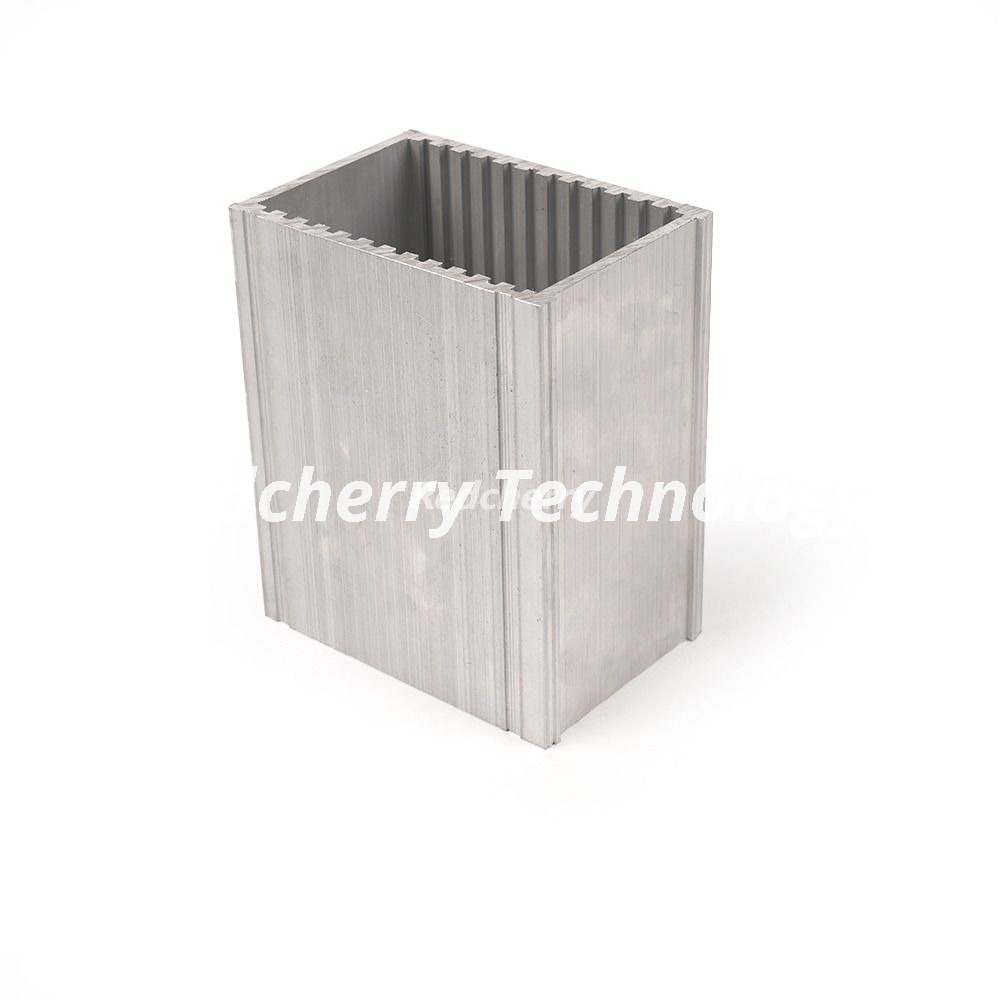
Selecting the correct aluminum alloy dictates the extrudability, mechanical performance, and finishing characteristics of the final part. The 6000 series alloys, alloyed with magnesium and silicon, are the industry standard for custom extrusions due to their excellent balance of strength, corrosion resistance, and machinability. The 7000 series offers ultra-high strength but is notoriously difficult to extrude into complex hollows.
Alloy Grade | Primary Characteristics | Typical Applications | Extrudability Rating |
|---|---|---|---|
6061 | High structural strength, good toughness | Aerospace frames, automotive chassis | Moderate |
6063 | Excellent surface finish, high corrosion resistance | Medical housings, architectural trim | High |
6005A | Balanced strength and complex profile capability | Railway components, heavy transport | Good |
7075 | Ultra-high strength, poor corrosion resistance | High-stress aerospace components | Low |
Beyond the alloy chemistry, the tempering process fundamentally alters the metal's mechanical properties. The T6 temper, achieved through solution heat treating at the press followed by artificial aging in an oven, maximizes the yield strength and hardness of 6000 series alloys. Matching the specific alloy and temper to the environmental exposure is critical for ensuring long-term component reliability.
Standard industry tolerances are sufficient for general construction. However, advanced manufacturing sectors require precision tolerances that are significantly tighter. Achieving these micro-tolerances depends entirely on the physics of dedicated die design and the control of the extrusion press.
Die design is a complex discipline. Aluminum flows faster in the center of the die and slower at the edges due to friction. Die designers use varying bearing lengths to choke or relieve the metal flow, ensuring the profile exits the die straight. The flow rate of the heated aluminum, the friction against the die bearing surfaces, and the cooling speed upon exiting the press all impact dimensional stability.
Leading manufacturers mitigate flow issues by utilizing advanced simulation software. Computational fluid dynamics allow die designers to predict how the metal will behave under pressure. By simulating the extrusion process digitally, engineers can adjust bearing lengths and correct flow imbalances before any physical steel is cut for the tooling.
A critical evaluation dimension for any extrusion partner is their ability to scale production seamlessly. Projects often begin with pilot runs, market testing, and rapid prototyping. During these early stages, flexibility regarding Minimum Order Quantities (MOQs) is vital. Forcing a massive production run before a design is fully validated ties up capital and increases the risk of holding obsolete inventory.
Small-batch production capabilities allow engineering teams to test physical parts in real-world conditions, refine the design, and validate assembly processes. Once the design is locked, the manufacturing partner must possess the operational infrastructure to scale up to high-volume, automated production without requiring you to transition to a different supplier.
This seamless scalability requires a facility equipped with multiple extrusion presses of varying tonnage capacities. A smaller press might handle the initial prototyping of a lightweight profile, while larger, automated presses take over for mass production, ensuring consistent lead times regardless of the order volume.
Procuring a raw extrusion is rarely the final step. Most components require secondary operations such as precision cutting, CNC milling, drilling, tapping, deburring, and surface finishing. Partnering with an extruder that offers these services in-house provides a massive strategic advantage.
Single-source manufacturing consolidates the supply chain, eliminating the transit times associated with moving parts between multiple specialized vendors. It also establishes a single point of accountability. If a finished part fails a quality inspection, there is no dispute between the extruder and the machine shop regarding who is responsible. The manufacturer controls the entire process from billet to finished component.
The most common hesitation when transitioning to custom extrusions is the initial capital expenditure required for die creation. Custom steel dies represent an upfront cost that standard profiles avoid. However, you must evaluate this investment through a comprehensive break-even analysis.
The upfront tooling cost is typically offset rapidly by the per-unit savings generated during production. By achieving near-net shape, custom extrusions eliminate hours of expensive CNC machining time. They drastically reduce material scrap rates and eliminate the labor costs associated with assembling multiple standard parts. For high-volume production runs, the tooling cost is amortized across thousands of units, reducing the impact on the individual part price to fractions of a cent.
Even for smaller production runs, custom extrusions become economically viable if the alternative involves highly complex, multi-axis machining from solid billet. Evaluating the volume thresholds and comparing the total manufacturing cost reveals that custom tooling frequently delivers a superior long-term return on investment.
Engineers must navigate the inherent trade-off between designing highly complex, asymmetrical profile shapes and the speed and feasibility of the extrusion process. Pushing aluminum through a die is subject to the laws of physics; not every shape drawn in CAD can be successfully extruded.
Implementing Design for Manufacturability (DFM) principles specific to aluminum extrusion is essential. Key DFM guidelines include:
Standardize Wall Thickness: Maintain uniform thickness across the profile to prevent uneven cooling rates that cause bowing or twisting on the runout table.
Radiuse All Corners: Apply a minimum radius to internal and external corners to reduce stress on the steel die and prevent premature tool failure.
Limit Tongue Ratios: Keep the depth-to-width ratio of channels low to prevent the steel die tongue from snapping under press pressure.
Symmetrize the Profile: Design symmetrical cross-sections whenever possible to ensure balanced metal flow through the die ports.
By adhering to these DFM principles, engineers optimize the extrusion cycle, ensuring faster press speeds, lower scrap rates, and reduced overall production costs.
Poorly optimized designs lead directly to extrusion defects. Common issues include surface tearing caused by excessive press speeds, dimensional warping resulting from uneven cooling, and incomplete fills in delicate profile sections. Correcting these flaws after the steel die has been cut is expensive and causes severe project delays.
Mitigating these risks requires rigorous early-stage validation. Before committing to hard tooling, engineering teams should utilize 3D printing to evaluate form, fit, and function within the larger assembly. Concurrently, finite element analysis (FEA) should be employed to validate the structural integrity of the design under anticipated load conditions.
The most critical mitigation strategy is engaging in collaborative engineering reviews between your design team and the extrusion manufacturer's die designers. Extrusion engineers possess practical, on-the-floor experience regarding metal flow dynamics. Involving them early ensures that potential bottlenecks are identified and resolved before they manifest as physical defects on the press.
Relying on an extrusion partner with outdated equipment or a single point of failure introduces significant supply chain risk. A breakdown on a critical extrusion press or a failure in the aging oven can halt production entirely, causing cascading delays throughout your manufacturing schedule.
To ensure uninterrupted supply, evaluate partners based on their operational redundancy. Select manufacturers equipped with multiple extrusion presses of varying sizes, multi-function automated handling machinery, and robust preventative maintenance schedules. This redundancy guarantees that if one machine goes down for maintenance, production shifts seamlessly to another line.
Strict quality control protocols are non-negotiable. Verify that the manufacturer holds relevant ISO certifications and utilizes advanced inspection technologies. Automated Optical Inspection (AOI) systems and Coordinate Measuring Machine (CMM) verification ensure that every batch meets the specified dimensional tolerances and surface finish requirements.
To successfully integrate custom aluminum extrusions into your manufacturing workflow and realize immediate operational benefits, execute the following actionable steps:
Submit preliminary CAD models to a shortlisted extrusion partner to validate extrudability and identify potential DFM bottlenecks before finalizing your design.
Request a comprehensive material review to select the exact 6000 or 7000 series alloy and temper that aligns with your specific structural, thermal, and environmental requirements.
Audit potential manufacturing partners for redundant press capabilities and comprehensive in-house secondary operations to secure your supply chain and reduce lead times.
Calculate the precise break-even point for custom tooling by comparing the upfront die investment against the projected per-unit savings in machining time, assembly labor, and material waste.
A: Lead times depend on profile complexity. Initial die design and cutting take two to four weeks. First article inspection (FAI) samples usually arrive within four to six weeks. After prototype approval, full-scale production runs require an additional three to five weeks, depending on press capacity and secondary finishing requirements.
A: Die costs vary based on the profile's size, complexity, and whether it is a solid or hollow shape. Simple solid dies require less upfront capital, while complex, multi-cavity hollow dies demand a larger initial investment. This one-time tooling expenditure pays off quickly by eliminating downstream machining and assembly steps.
A: Standard tolerances follow Aluminum Association guidelines, suitable for basic framing. Precision tolerances are much tighter, often holding dimensions to ±0.005 inches or better. Hitting these micro-tolerances requires specialized die design, strict temperature control at the press, and advanced cooling techniques on the runout table.
A: Yes, you can design profiles with varying wall thicknesses to put material exactly where stress occurs. However, drastic transitions between thick and thin sections cause uneven cooling, leading to dimensional warping. Keep transitions gradual and maintain uniformity wherever possible to ensure stable metal flow.
A: 6061 offers higher tensile and yield strength, making it the go-to for heavy-duty structural parts, but it is harder to push through complex dies. 6063 has slightly lower strength but provides superior extrudability for thin walls and intricate details. It also yields a much smoother surface for cosmetic anodizing.
A: Many advanced manufacturers offer flexible Minimum Order Quantities (MOQs) to support rapid prototyping and pilot runs. While small batches carry a higher setup cost per unit, they let engineering teams validate physical parts and assembly processes cost-effectively before locking in high-volume production.
A: Capable extrusion partners offer comprehensive in-house secondary operations. These include precision cutting, multi-axis CNC milling, drilling, tapping, and deburring. They also handle thermal treatments and surface finishing like hard-coat anodizing or powder coating. Keeping these processes under one roof reduces lead times and tightens quality control.


